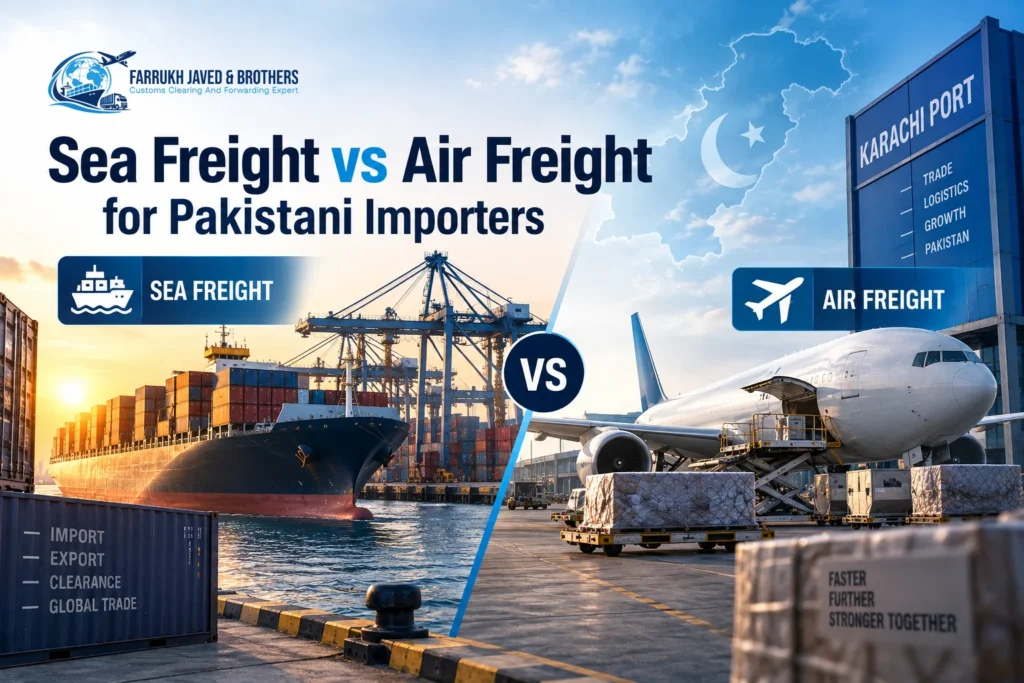
Every importer eventually faces the same decision: ship by sea or by air?
Air is faster. Sea is usually cheaper for large volumes. But the real answer depends on what you are shipping, how soon you need it, and how much the delay or extra cost will affect your business.
This guide compares sea freight vs air freight in Pakistan in plain language, so you can choose with confidence.
The Short Answer
Choose sea freight when your cargo is heavy, bulky, or high in volume, and you can plan ahead. Choose air freight when speed matters most, or when the goods are urgent, high in value, lightweight, or perishable.
Many importers use both, depending on the shipment.
What Is Sea Freight?
Sea freight moves goods by ship in containers or as bulk and project cargo. For Pakistani importers, most sea cargo arrives through Karachi’s ports, including Karachi Port and Port Qasim.
There are two common ways to ship by sea:
- FCL (Full Container Load): you use a whole container for your goods.
- LCL (Less than Container Load): your goods share a container with other shippers’ cargo.
Strengths:
- Usually lower cost for heavy or large shipments
- Suitable for large volumes, machinery, raw materials, and bulk goods
- Can carry oversized and heavy project cargo
Limitations:
- Slower than air, and transit time depends on route, carrier, and schedule
- Needs earlier planning
- Port and container charges, such as demurrage and detention, can apply if cargo or containers stay too long
What Is Air Freight?
Air freight moves goods by aircraft, arriving at airports such as Karachi, Lahore, or Islamabad.
Strengths:
- Much faster than sea
- Useful for urgent, time-sensitive, or high-value goods
- Suitable for perishable or sensitive items that need quick delivery
- Can help you restock quickly
Limitations:
- Usually higher cost, especially for heavy cargo
- Limits on size, weight, and certain types of goods
- Rates are often based on the greater of actual weight or volumetric weight, so bulky but light items can cost more than expected
Side-by-Side Comparison
| Sea Freight | Air Freight | |
|---|---|---|
| Speed | Slower | Faster |
| Cost for heavy cargo | Usually lower | Usually higher |
| Best for | Bulk, heavy, non-urgent goods | Urgent, high-value, light goods |
| Cargo size | Large volumes and oversized items | Limited by aircraft space |
| Planning needed | More lead time | Less lead time |
| Main document | Bill of lading | Airway bill |
| Common extra charges | Port, terminal, demurrage, detention | Airport handling, storage |
Actual rates and transit times change with routes, seasons, and carriers, so always request a current quote.
How to Decide: Key Questions
1. How urgent is the shipment?
If your stock is running out or a customer is waiting, speed may be worth the cost. If you can plan ahead, sea freight is often more economical.
2. How heavy or bulky is the cargo?
Large volumes usually favor sea. Small, light, valuable items often suit air.
3. What is the value of the goods?
For high-value goods, the cost of air freight can be a smaller share of the total value, and faster delivery can reduce risk.
4. Is the product perishable or sensitive?
Food, medical items, and other time-sensitive goods may need faster transport or temperature-controlled options. Our team can also advise on cold chain requirements.
5. What does it cost to wait?
A slower shipment can mean more inventory tied up, delayed sales, or stopped production. Compare that with the extra freight cost.
6. Are there restrictions?
Some goods have special rules for air or sea transport, especially hazardous items. Check before you book.
Look at the Total Cost, Not Just the Freight Rate
A common mistake is to choose based only on the freight price. The real cost of getting goods to your warehouse usually includes:
- Freight charges
- Port or airport handling and terminal charges
- Customs duties and taxes
- Customs clearance fees
- Inland transport
- Storage, demurrage, or detention if cargo stays too long
- Insurance
When you add these up, the cheapest freight rate is not always the cheapest option overall.
Customs Clearance Applies to Both
Whether your cargo arrives by sea or by air, it needs to go through customs clearance. The basics are the same: accurate documents, correct HS codes, a properly filed declaration, and payment of duties and taxes.
The details differ slightly. Sea shipments rely on a bill of lading and container movement, while air shipments rely on an airway bill and airport procedures. In both cases, mistakes in documents are a common cause of delay. Our guide on customs clearance delays explains the most common ones.
Can You Use Both?
Yes, and many importers do. A common approach is to send a small urgent batch by air and the bulk of the order by sea. This keeps your stock moving while controlling cost.
Common Mistakes to Avoid
- Choosing only by freight rate. Always compare total landed cost.
- Booking too late. Last-minute shipments often force more expensive options.
- Ignoring volumetric weight on air shipments. Packaging size matters.
- Not checking cargo restrictions. Some products have special requirements.
- Not planning for port charges. Delays at the port can add costs on sea shipments.
- Leaving documents until the last minute. Prepare them early with your clearing agent.
Questions to Ask Your Freight Forwarder
- What transit time should I expect, and what could change it?
- What is included in your quote, and what is extra?
- Do you handle customs clearance and delivery too?
- What documents do you need from my supplier, and when?
- How will you keep me updated during transit?
- What happens if the shipment is delayed or selected for examination?
Frequently Asked Questions
Is sea freight cheaper than air freight in Pakistan?
For heavy or large shipments, sea is usually cheaper. For small, light, urgent shipments, the difference may be smaller, and air may be more practical.
How long does sea freight take?
It depends on the origin, route, and carrier. Ask your forwarder for current schedules.
Which is better for perishable goods?
Perishable goods often need faster transport and temperature control. The right option depends on the product and route.
What is volumetric weight?
It is a calculated weight based on package size. Air freight is often charged on whichever is greater, actual weight or volumetric weight.
Do I need a clearing agent for both sea and air imports?
Many importers use an agent for both, since customs procedures are detailed and mistakes can be costly. Check current requirements with Pakistan Customs or a licensed agent.
Can I ship part by air and part by sea?
Yes. Splitting a shipment is common when part of the order is urgent.
Final Thoughts
There is no single best choice between sea and air freight. The right option depends on your goods, your timeline, and your total cost, not just the headline rate.
Plan early, compare the full cost, and talk to your forwarder before you book. A short conversation at the start can save a lot of money and stress later.
At Farrukh Javed & Brothers, we handle sea freight, air freight, and customs clearance in Karachi, with more than 20 years of experience. If you want help choosing the right option for your next shipment, talk to our logistics team or explore our freight forwarding services.